

How to Quit Drinking on Your Own and Find Support

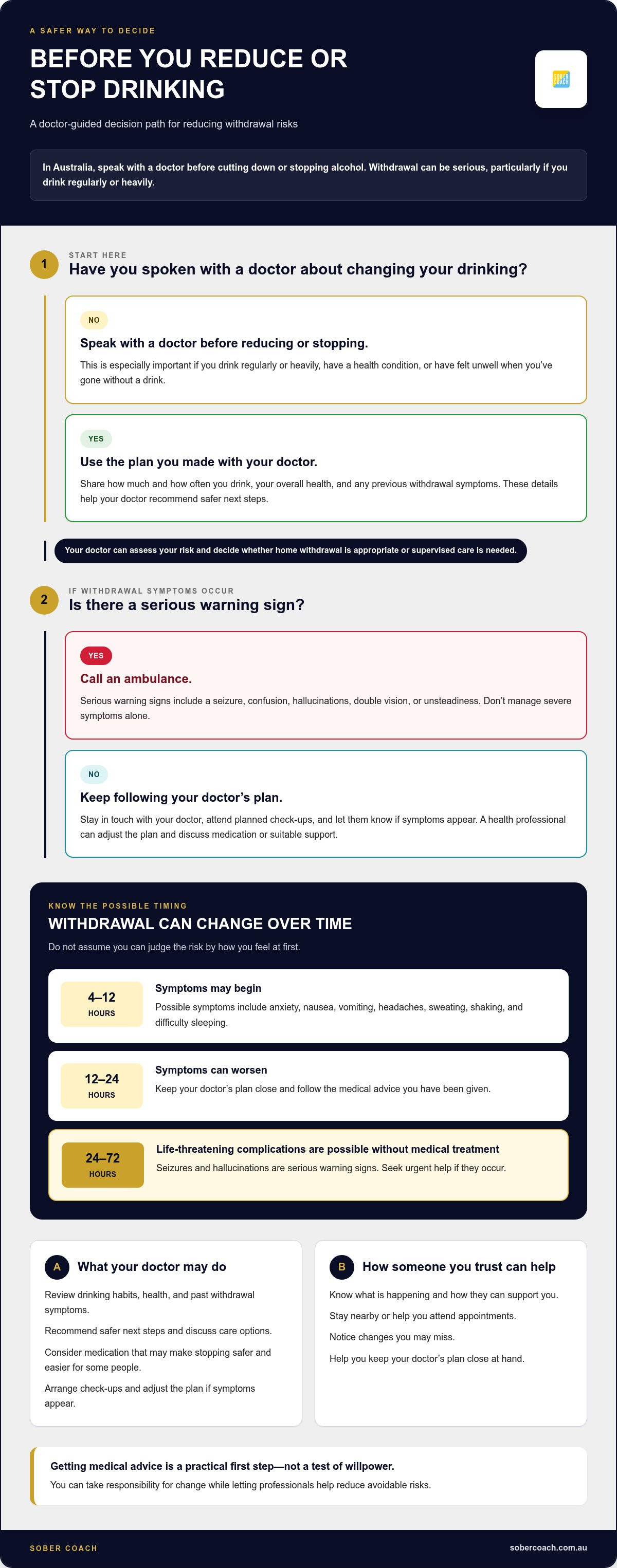
Trying to quit drinking on your own isn’t always safe. In Australia, speak with a doctor before cutting down or stopping, especially if you drink regularly or heavily, because withdrawal can be serious. The safest way to decide how to quit drinking on your own is to get medical advice about a plan that fits your health and drinking habits.
If you’re looking for how to quit drinking on your own, you don’t have to judge yourself to begin. This guide covers practical ways to change your drinking, what may happen when you stop, and how to recognise situations and feelings that trigger the urge to drink. You’ll also find ideas for building new routines and seeking support, so change is about more than what you’re leaving behind. It’s about creating a life you want to return to.
Table of Contents
1. How can you reduce or quit alcohol?
In Australia, speak with a doctor before reducing or stopping alcohol. This is especially important if you drink regularly or heavily, have health conditions, or have felt unwell when you’ve gone without a drink. Your doctor can review your drinking habits, overall health, and any previous withdrawal symptoms, then help plan safer next steps. Be direct about how much and how often you drink. Accurate details help them assess your situation.
Withdrawal can start within 4–12 hours after your last drink. Symptoms may include anxiety, nausea, vomiting, headaches, sweating, shaking, and difficulty sleeping. They can worsen between 12 and 24 hours, and the period from 24 to 72 hours can carry a risk of life-threatening complications without medical treatment. Seizures and hallucinations are serious warning signs. Don’t assume you can judge the risk by how you feel at first.
Stopping suddenly may be dangerous if your body has adapted to regular alcohol use. Cutting back can also trigger withdrawal, so don’t make a rapid reduction plan without medical advice. A doctor can consider your drinking pattern, health, and past withdrawal experiences when recommending next steps. They can also arrange check-ups to monitor your progress and adjust the plan if symptoms appear.
Medical options depend on your level of risk. A health professional can help determine whether withdrawal at home is appropriate or supervised care is needed. Medication may make stopping safer and easier for some people. A doctor can discuss these options, create a withdrawal plan, and refer you to suitable support. This is medical care, not a test of willpower.
Prepare for the first days by telling someone you trust what’s happening and agreeing on how they can help. They might stay nearby, help you attend appointments, or notice changes you may miss. Keep your doctor’s plan close at hand, and don’t manage severe symptoms alone. If withdrawal involves a seizure, confusion, hallucinations, double vision, or unsteadiness, call an ambulance.
Once immediate safety is addressed, ask your doctor about ongoing support and follow-up. A plan may include check-ups, referrals, and help changing the routines behind your drinking. If you’re considering how to quit drinking on your own, remember that seeking medical advice is still your choice and a practical first step. You can take responsibility for change while letting professionals help reduce avoidable risks.
2. What Happens To Your Body When You Stop Drinking Alcohol?
Stopping alcohol can bring physical and emotional changes, but the timing varies from person to person. According to Drinkaware, sleep quality, energy, concentration, and mental clarity may begin improving after three to seven alcohol-free days. These changes can make everyday tasks feel more manageable. Notice them as useful signs, not a scorecard for judging your progress.
After one to two weeks without alcohol, sleep patterns, mood, and anxiety may begin to improve, according to Drinkaware. The liver starts repairing itself and reducing fat build-up after three to four weeks. Liver function continues to improve over one to three months. These timelines can help you choose a meaningful goal, while keeping in mind that your experience may not follow a set schedule.
Make an action plan with a clear goal, a reason that matters to you, and a way to review your progress. For example, you could try a week or a month without alcohol, then note changes in sleep, mood, energy, and concentration. If your goal is to cut down, decide your limit before a social event. You might also choose one fewer glass each time you go out. If you’ve been advised to avoid alcohol, make your plan about staying alcohol-free rather than setting a drinking limit.
Keep your goal realistic and specific. “Drink less” is hard to measure; “choose alcohol-free drinks at Friday dinner” gives you a clear action. If you’re cutting down, plan at least three alcohol-free days each week and review how that fits your drinking habits. Get medical advice first if stopping or reducing could cause withdrawal. Your written plan can also say what you’ll do if a goal feels difficult, such as contacting a supportive friend.
Social support can make a plan easier to follow. Tell a trusted friend what you’re changing and ask for practical help, such as meeting for coffee instead of going to a pub. Prepare a short response to offers of a drink: “I’m taking a break tonight.” You can also set boundaries by leaving an event early or skipping one that makes your goal harder to keep.
Mark progress with rewards that support your next step, such as setting aside money you would have spent on alcohol for an activity you enjoy. If you drink more than planned, record what happened and restart with your next decision. For structured guidance at home, in-home recovery support can help you work through goals, routines, and accountability.
3. Identifying emotional and situational triggers
A drink can become linked to a feeling, place, person, or familiar time of day. For three to four weeks, keep a diary of what you drink, who you’re with, and where you are. Add what happened just before the urge, how you felt, and what followed. A Friday drink after a tense workday may point to both a time-based habit and stress as triggers.
Look for patterns rather than judging yourself. Emotional triggers can include loneliness, anxiety, frustration, or boredom. Situational triggers might be a particular pub, a social event, or seeing someone you usually drink with. Ask yourself: did I want alcohol, or did I feel pressured? That distinction can help you choose a response that meets the actual need.
Use your diary to make a specific plan for each recurring trigger. If stress after work often leads to drinking, try walking home, calling a friend, or changing your evening route. If a particular venue makes it harder to avoid alcohol, choose another place to meet. Avoiding a strong trigger for now can protect the change you’re working toward. It doesn’t mean you need to avoid every social setting.
Cravings can feel urgent, but you can decide what to do before one arrives. Try delaying a decision and distracting yourself for a few minutes with a shower, a short walk, or a simple task. Move away from alcohol if it’s nearby, and contact someone supportive. A craving is an experience to respond to, not proof that you’ve failed or that change is impossible.
Notice what happens when you try a new response. Write down whether the urge eased, what helped, and what you might adjust next time. If a plan didn’t work, treat that as useful information. For example, if walking past a bottle shop brings on an urge, take another route next time. Small, specific changes can make a familiar pattern less automatic.
Some triggers are connected to difficult emotions or relationships, and changing your drinking habits may bring those feelings into focus. A trusted person, counsellor, or support group can give you space to talk about what’s behind the urge. You don’t have to share everything at once. Start with one example from your diary and explain what kind of support would help.
If you’re changing your relationship with alcohol, keep your diary somewhere easy to reach and review it each week. Note the triggers you’ve recognised, the responses you’ve tried, and the moments you chose differently. This record turns “I always drink when I’m stressed” into a clearer picture, with practical options for what to try next.
4. Support from friends, family and services
Support can make recovery feel less isolating and give you practical help during difficult moments. Choose someone you trust and explain what you’re changing, using clear words such as, “I’m working on my drinking and need your support.” Ask for something specific: a check-in after work, company at a social event, or alcohol kept out of shared spaces. A clear request gives friends and family a useful way to respond.
Agree on boundaries before a challenging situation arises. Tell friends you’d prefer a coffee catch-up instead of drinks, or ask family not to offer alcohol at dinner. If someone responds with pressure or jokes, prepare a short reply and change the subject. You don’t have to explain every detail. Protecting your recovery can mean limiting time with people or in settings that repeatedly make your goals harder to reach.
A therapist can help you explore difficult experiences that drinking may have helped you avoid, including anxiety, grief, or relationship stress. Choose one issue to discuss and bring an example, such as reaching for alcohol after an argument. Therapy can help you develop other ways to respond. Seeking support doesn’t require you to adopt a particular label or decide what recovery must look like.
Peer support offers a different kind of connection: people share their experiences and listen without needing you to explain every detail. Alcoholics Anonymous is one support group option. You can attend a meeting, listen, and decide what feels useful. A group may also help you plan for cravings, social pressure, or a difficult evening. If one meeting style doesn’t suit you, another kind of support may fit better.
In Australia, the National Alcohol and Other Drugs Hotline, online services, support groups, and local alcohol services are options for seeking help. A doctor can also discuss referrals and follow-up, especially if addiction concerns or withdrawal symptoms are part of your situation. Consider what you need next: medical guidance, emotional support, or connection with peers. Different needs can call for different kinds of help.
Make support concrete. Save a trusted person’s contact details, agree on a phrase that means “call me,” and decide who you’ll contact if cravings become difficult. If friends or family aren’t safe or supportive, choose another option, such as a therapist, peer group, or local alcohol service. Asking for help is a practical step in recovery, not a failure of independence.
5. Replacing drinking routines with new activities
When you stop drinking, the empty space in your day can feel as challenging as quitting itself. Alcohol may have marked the shift from work to evening, helped you unwind, or made socialising feel easier. Choose a replacement that meets the same need. For example, if a drink helped you decompress after work, take a walk, cook dinner, or paint instead. The aim is to build a routine you can return to.
Use your reasons for changing as a guide when choosing activities. If connection matters to you, invite a friend for coffee or take a class together. If anxiety tends to rise during unstructured evenings, plan something absorbing, such as learning an instrument or trying a new recipe. Volunteering, hiking, and learning something new can also give your time a different focus.
Make the alternative specific. Instead of thinking, “I’ll find something to do,” decide what, where, and when. You could set out walking shoes before finishing work, book a painting session, or plan a meal that holds your attention. Put the activity in your calendar and prepare what you need beforehand. A ready-to-go option can make it easier to follow through when your old routine calls.
Social rituals can change, too. Suggest an alcohol-free event, a film night, or a daytime walk rather than meeting at a bar. If a familiar group setting brings pressure, spend time with friends who support your choice or leave early. You don’t have to keep every old ritual unchanged. Try a different setting and notice whether it feels more comfortable.
Cravings may still arise as you build a new routine. Treat them as a cue to pause, not a command to drink. Distract yourself for a few minutes with a shower, a short walk, or a hands-on task. Then check what you need: rest, company, food, or a way to release tension. If one activity doesn’t help, choose another and note what worked.
Keep track of the routines you try and how they affect your mood, energy, and connection with others. Your notes can show which activities feel rewarding, rather than simply filling time. If you miss a planned activity, restart at the next opportunity instead of treating a change of plan as failure. Building a life beyond alcohol is active work, shaped by choices that reflect your reasons for change.
If you want help turning those choices into steady routines, connect for support with your recovery goals.
Sober Coach: One-on-One Recovery Coaching
Sober Coach offers One-on-One Recovery Coaching for people who want support turning change into practical steps. Coaching can help you work through goals, triggers, and routines, especially when trying to manage the process alone feels difficult. You can also explore Intensive Recovery Workshops, In-Home Recovery Support, group coaching online via Zoom, or online rehab.
These options offer different ways to build structure and connection around recovery. Choose support that fits what you’re working through, whether that means one-to-one guidance, focused support over a week, or ongoing group coaching. Sober Coach provides practical recovery support, not medical detox or care during alcohol withdrawal.
If you’d like to discuss support, visit sobercoach.com.au.
Choose the next step that feels possible
Change doesn’t have to begin with a perfect plan or a promise about forever. It can start with one honest decision: notice what you need, make room for it, and take the next step with intention. Learning how to quit drinking on your own can also mean recognising when support would help you feel steadier. Asking for help doesn’t take away your agency. It gives you more ways to use it.
If you want to talk through what support could look like, Sober Coach offers recovery coaching, workshops, and in-home support. These options can help you build structure around the changes you’re ready to make, while medical professionals remain the right people to guide withdrawal care.
Contact Sober Coach for support when you’re ready to explore a next step. You don’t need to have everything figured out before you begin. Start where you are, and keep moving toward a life that feels more like your own.
Frequently Asked Questions
How can I cut down my drinking?
First, get medical advice if you drink regularly or heavily, since reducing your intake can trigger withdrawal. If a doctor agrees that cutting down is suitable, choose a specific change, such as ordering one fewer glass when out or alternating alcoholic drinks with non-alcoholic ones. Decide your limit before social events and track what you drink. If symptoms appear as you reduce, pause and contact your doctor rather than making further changes alone.
How can you reduce or quit alcohol?
Start by discussing your drinking pattern and health with a doctor, then follow a plan suited to your circumstances. If you’re reducing, practical changes might include choosing lower-alcohol drinks, sipping slowly, or planning alcohol-free events with friends. If you want to stop completely, ask what support and monitoring you may need. Your plan should account for withdrawal risk, daily routines, and what you’ll do if cravings or difficult emotions arise.
What Happens To Your Body When You Stop Drinking Alcohol?
Your experience can vary, but some changes may begin within days. Drinkaware says sleep quality, energy, concentration, and mental clarity may start improving after three to seven alcohol-free days. Mood, anxiety, and sleep patterns may begin to improve after one to two weeks. The liver starts repairing itself and reducing fat build-up after three to four weeks. These are possible changes, not a personal timetable or a substitute for medical advice.
Is it safe to stop drinking alcohol suddenly at home?
It may not be safe, particularly if you drink heavily or regularly, or have experienced withdrawal before. Alcohol withdrawal can become serious, and early symptoms don’t reliably indicate how severe it may become. Speak with a doctor before stopping or cutting down. They can assess your drinking pattern, health, and past symptoms, then help determine whether withdrawal at home is appropriate or supervised care is needed.
What are the symptoms of alcohol withdrawal and when do they start?
Withdrawal symptoms can begin 4–12 hours after the last drink and may include anxiety, nausea, vomiting, headaches, sweating, shaking, and insomnia. Symptoms can worsen between 12 and 24 hours. Seizures and hallucinations can also occur. The type and intensity of symptoms differ, so don’t use a mild start as a reason to stop seeking help. Tell a doctor what you’re experiencing and when it began.
When is alcohol withdrawal a medical emergency in Australia?
Call an ambulance if someone withdrawing from alcohol has a seizure, becomes confused, experiences hallucinations or double vision, or becomes unsteady on their feet. These symptoms need urgent medical attention. Stay with the person if it’s safe, explain that alcohol withdrawal may be involved, and share when they last drank if you know. Don’t leave them to manage severe symptoms alone or wait to see whether they pass.
Who is at risk of severe alcohol withdrawal or seizures?
Risk is higher for people who drink heavily or stop drinking quickly. Dependence, other medical or mental health problems, and a history of seizures or hallucinations during previous attempts to stop also matter. If any of these apply, speak with a doctor before changing your intake. Share details about your drinking, health conditions, medications, and past withdrawal experiences so they can assess what support is appropriate.
How can I make a safer plan to quit drinking at home?
Arrange a doctor’s appointment before changing your drinking, and discuss whether withdrawal at home is safe for you. Ask about a personalised plan, follow-up, and what symptoms require urgent care. Tell a trusted person about the plan, agree how they can check in, and keep contact details accessible. If a doctor recommends supervised care, follow that advice rather than trying to manage withdrawal at home. Peer or coaching support can complement, not replace, medical care.
Comments