

Plan routines, travel and social time for sober first holidays

Your first sober holiday can bring new people into the picture, not just take drinking out of it. Change familiar Christmas routines, travel with people who respect your choice, and make plans to meet others through shared activities or local recovery meetings arranged before you leave. This sober first holidays guide shows how to make those plans feel practical, not restrictive.
It makes sense if holiday gatherings, travel or time with friends who drink feels daunting. Familiar traditions can carry old habits with them, and you don’t have to pretend that feels easy. Shape the day around what supports you, including stepping away from events that don’t feel right.
Here, you’ll find ways to adjust Christmas routines, choose supportive travel companions and accommodation, and create opportunities to connect while away. The focus is on making room for a good time that fits the life you’re building, one thoughtful choice at a time.
Table of Contents
1. Changing routines during a first alcohol-free Christmas
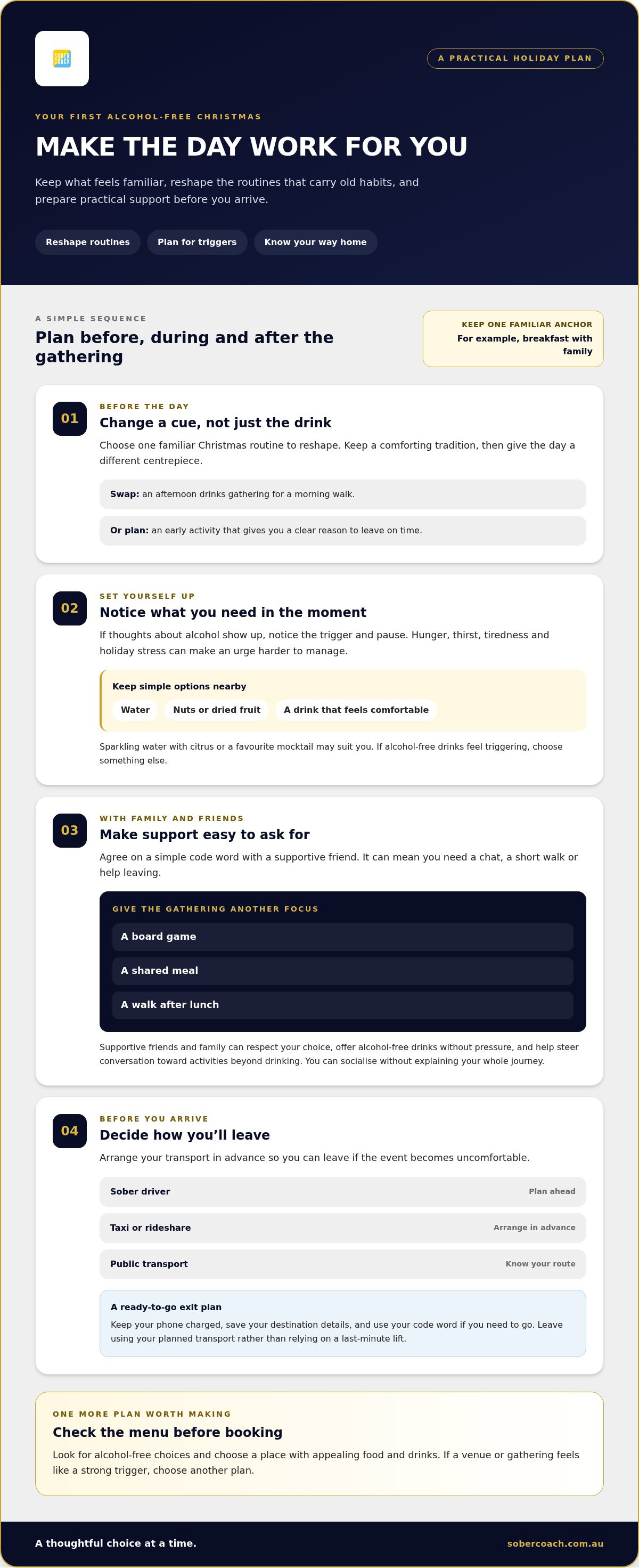
Practical holiday sobriety starts with changing the cues around Christmas, not just removing alcohol. Choose a familiar routine to reshape: swap an afternoon drinks gathering for a morning walk, or plan an early activity that gives you a clear reason to leave on time. Your first alcohol-free Christmas may feel different because old traditions and habits are changing too. Keep a familiar anchor, such as breakfast with family, while creating a new centrepiece for the day.
Thoughts about alcohol may still show up. Rather than fighting them, notice the trigger and pause to consider what you need. Hunger, thirst, tiredness and holiday stress can make an urge harder to manage, so keep water and snacks such as nuts or dried fruit nearby. Prepare an alcohol-free option you enjoy, like sparkling water with citrus or a favourite mocktail. If alcohol-free drinks feel triggering, choose something else.
For a family gathering, agree on a simple code word with a supportive friend. It can mean you need a chat, a short walk or help leaving. Friends and family can support you by respecting your decision, offering alcohol-free drinks without pressure, and planning conversation or activities that aren’t centred on drinking. You can socialise without explaining your whole journey. Suggest a board game, a shared meal or a walk after lunch.
Make an exit plan before you arrive. In Australia, arrange a sober driver, taxi, rideshare or public transport in advance, and keep your phone charged with your destination details saved. If the event becomes uncomfortable, use your code word and leave using your planned transport rather than relying on a last-minute lift.
Restaurants need planning too. Before travelling or booking a Christmas meal, look at the menu and ask about alcohol-free choices. A reservation somewhere with appealing food and drinks gives the group something to enjoy together. If a venue or gathering feels like a strong trigger, choose another plan. Waking up clear-headed after a day shaped around your needs can become a worthwhile new tradition.
2. Choosing supportive travel companions
Choose travel companions based on how they treat your decision, not just how long you’ve known them. Tell them before booking that you won’t be drinking, and notice whether they accept that without bargaining. A supportive friend won’t turn every dinner into cocktails or make your plans feel like an inconvenience. Talk about what you’d enjoy instead, such as a coastal walk, a market visit or a relaxed meal.
Agree on practical boundaries before the trip. You might say, “I’m happy to join the dinner, but I’ll skip the bar afterwards.” Ask someone you trust to be your contact if you feel unsettled or triggered. Decide what message means you need a quick call, and save their details somewhere easy to find. A clear plan can make it easier to ask for support in the moment.
Keep your phone handy for online encouragement and support while travelling. Save the details of supportive people and online communities before departure, so you’re not searching while stressed. If companions choose a venue focused on drinking, take a minute outside, message someone you trust or head back to your accommodation. You don’t have to stay until everyone else leaves.
For Australian holiday periods, include online recovery support and a trusted contact in your plan. Group coaching online via Zoom can provide a way to connect remotely. Online recovery support can help you stay connected while away from familiar routines. Plan how you’ll access support during the trip, rather than relying on feeling motivated all the time.
Share the kind of trip you want before plans are locked in. A companion who’s open to alcohol-free activities can help make the holiday social without centring it on drinking. If others order cocktails, choose a mocktail only if it suits you; otherwise, pick a drink that feels comfortable. Waking up clear-headed and ready for the day can be a welcome part of the trip.
3. Choosing accommodation away from drinking-focused areas
When booking a holiday stay, use a map to spot local bars, late-night venues and party areas. Then compare accommodation in a quieter neighbourhood, where returning after dinner doesn’t mean passing the drinking scene. A residential area or coastal spot can make it easier to shape your mornings around a walk, breakfast or sightseeing. Balance distance with practical transport, so getting to planned activities feels manageable. Choose a setting that supports the trip you want.
Social pressure can still arise at a family gathering or group dinner, even when your accommodation feels calm. Prepare one clear line before you arrive: “I’m not drinking, but I’d love a sparkling water.” If someone asks why, keep it brief: “I feel better this way.” You don’t owe the group a longer explanation. Practise saying it aloud once, so the words feel familiar when the moment comes.
Make the stay work for you, too. If a group suggests drinks near the hotel, propose coffee, a meal or an activity instead. You could say, “I’m happy to join dinner, but I’m skipping the bar afterwards.” Notice who respects that boundary. Their response can help you decide how much time to spend together, without turning your choice into a debate.
Not drinking may leave more of your holiday budget available for other plans. Rather than guessing how much you’ll save, track what you would have spent on drinks and decide where that money goes instead, such as a museum visit or a special breakfast. Before booking, compare the accommodation’s location, transport options and nearby places to eat. A stay near a beach, park or local café gives you easy alternatives when others plan around drinking. Make the room a comfortable base, not just somewhere to sleep after a night out.
4. Meeting people on sober holidays
Connection doesn’t have to come from a bar. Choose a shared-interest activity where conversation can happen naturally, such as a coastal walk, cooking class or morning market visit. If you’re trying something new, arrive with one simple goal: learn the host’s name or ask someone about the activity. Small moments can make meeting people feel less pressured.
To find local AA, SMART Recovery or other sober events in Australia, search each organisation’s meeting listings by destination and travel dates. Check whether a meeting is in person or online, then plan how you’ll get there before leaving. You can also look for community event listings and recovery groups on Instagram, while prioritising events with clear organisers and details.
Arrange a local recovery meeting before your trip, rather than waiting until you feel isolated. Having a place to connect can add structure to a day and give you a familiar conversation while everything else feels new. Save the meeting details on your phone and tell a trusted person where you plan to go. That simple preparation can help you follow through when travel plans change.
For social nightlife, Dry Disco, Morning Gloryville and DAYBREAKER are examples of sober nightlife events held internationally. Treat them as ideas for the kind of event to look for, not a guarantee they’re coming to your destination. Search the event name with your city, and check current dates and details before building plans around them. A daytime dance event may suit you better than a late night.
Meeting people isn’t a test of your sobriety. You can attend one event, stay briefly, and leave if the setting doesn’t feel right. For help thinking through social plans and recovery goals, talk through your sober holiday plans.
Sober Coach: One-on-One Recovery Coaching
Sober Coach offers One-on-One Recovery Coaching to help you work through holiday routines, social pressure and plans for staying alcohol-free. If the season feels difficult to manage alone, a Sober Coaching Session provides space to explore your goals and make practical choices that fit your life, without rehab or AA meetings.
For more focused support, Sober Coach also offers Intensive Recovery Workshops, In-Home Recovery Support and Group coaching online via Zoom. These options give you different ways to engage with recovery support, whether you want individual guidance, a group setting or support at home.
You don’t need to wait until a holiday feels overwhelming to seek support. If you’d like to explore one-to-one coaching or online group support, contact Sober Coach.
Make space for the holiday you want
Your first alcohol-free holiday doesn’t have to follow the old script. Let this sober first holidays guide be a starting point, then choose one small change that feels meaningful to you. Perhaps that’s creating a new tradition, making room for genuine connection, or giving yourself permission to leave a situation that no longer feels right.
Progress isn’t measured by how perfectly the season goes. It’s built through choices that reflect what matters to you, including asking for support when you need it. Sober Coach offers One-on-One Recovery Coaching, Intensive Recovery Workshops and In-Home Recovery Support to help you work towards recovery goals in a way that fits your needs.
If you’d like support as you plan your next step, contact Sober Coach for support. You’re allowed to shape a holiday that feels more like yours, and that can be a powerful beginning.
Frequently Asked Questions
How can you prepare for your first holiday season without alcohol?
Prepare by deciding how you want the season to feel, then write down the situations most likely to challenge that intention. For example, note which events involve alcohol, who you can talk to, and what you’ll do afterwards. Keep the plan somewhere easy to reach, such as your phone’s notes app. A sober first holidays guide can help turn broad intentions into choices you can act on.
How can you handle alcohol offers and pressure at holiday gatherings?
Respond briefly, then move the conversation along: “No thanks, I’m not drinking. How was your trip?” You can also keep a non-alcoholic drink in hand if that makes repeated offers less likely. If someone keeps pushing, repeat your boundary once and change seats or speak with another guest. You don’t need to convince anyone that your decision is valid.
What are alcohol-free alternatives and festive drinks available in Australia?
Festive options can be simple: sparkling water with lime and mint, a fruit spritz, or alcohol-free ginger beer served over ice. For a richer flavour, mix cranberry juice with soda water and fresh citrus. Ask the host what’s in a punch bowl before pouring, and check product labels if choosing packaged drinks. Alcohol-free substitutes don’t suit everyone, so choose what feels comfortable.
What are common holiday triggers for people in recovery, and how can they manage them?
Family tension, loneliness, travel disruption and familiar drinking rituals can all bring up difficult feelings. Identify your personal warning signs, such as irritability or withdrawing from conversation, then choose a response in advance. A short walk, quiet space or call with someone you trust can help you pause and reset. If a particular tradition reliably feels risky, create a different way to mark the occasion.
What should you do if you feel at risk of drinking or experience a relapse?
If you feel at risk, step away from alcohol and tell someone you trust plainly that you need support now. If you’ve had a drink, avoid turning one moment into a reason to give up; contact someone supportive and focus on your next safe choice. Once the immediate pressure has eased, consider what led up to it and reconnect with recovery support.
Comments