

Recovery Coaching in Australia for Independence and Daily Living

Recovery is personal, but you don’t have to work out your next steps alone. A recovery coach in Australia can help you set practical goals, strengthen daily routines and find support that fits your needs. In an NDIS context, a psychosocial recovery coach can support some participants with psychosocial disability to navigate services and work towards their recovery goals.
It makes sense to want support that feels practical and human, not like another set of labels or expectations. A coach with lived experience of mental ill health and recovery may draw on that understanding to offer perspective while keeping your goals and choices at the centre.
This article explains what recovery coaching can involve, how it may support everyday life and connections with services, and why lived experience can matter. You’ll also learn how Sober Coach’s recovery support can fit into the next steps you choose.
Table of Contents
Building independence and daily living capacity
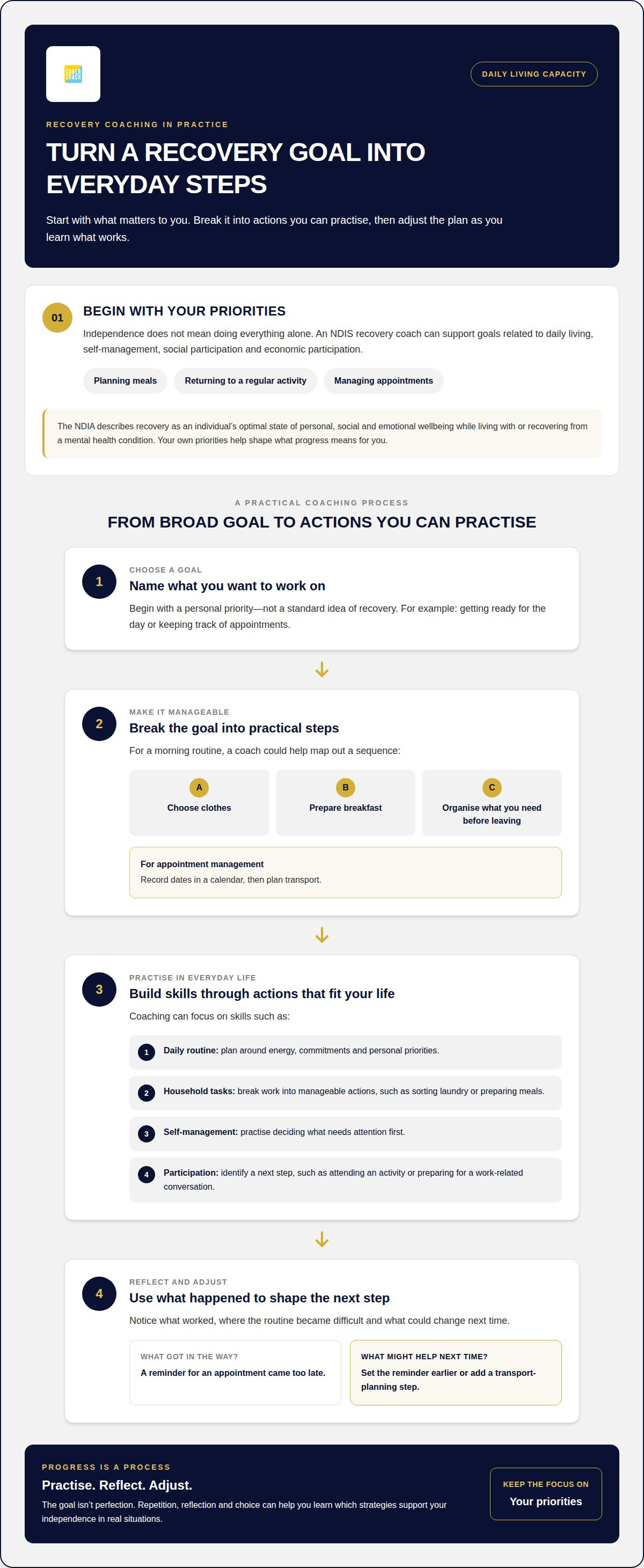
Independence doesn’t mean you have to do everything alone. An NDIS recovery coach can support goals related to daily living, self-management, social participation and economic participation. Start with what matters to you, rather than a standard idea of recovery. Progress might mean planning meals, returning to a regular activity or managing appointments.
The National Disability Insurance Agency defines recovery as an individual’s optimal state of personal, social and emotional wellbeing while living with or recovering from a mental health condition. That definition leaves room for your own priorities. A psychosocial disability may arise from a mental health condition and may be included in some NDIS plans. The support item for Psychosocial Recovery Coach became available to NDIS participants with psychosocial disability in 2021.
Everyday skills are easier to build when you break a broad goal into practical steps. If getting ready for the day feels difficult, a coach could help map out a routine: choose clothes, prepare breakfast, then organise what you need before leaving home. If managing appointments is your priority, steps might include recording dates in a calendar and planning transport. This turns “be more independent” into actions you can practise and adjust.
Capacity grows through repetition, reflection and choice. Coaching can focus on skills such as:
Planning a daily routine around energy, commitments and personal priorities.
Breaking household tasks into manageable actions, such as laundry sorting and meal preparation.
Practising self-management, including deciding what needs attention first.
Identifying a next step towards social or economic participation, such as attending an activity or preparing for a work-related conversation.
Confidence often comes from seeing evidence of your progress. A coach can help you notice what worked, where a routine became difficult and what to change next time. If you missed an appointment because the reminder came too late, you might set it earlier or add a transport-planning step. The goal isn’t perfection. It’s learning which strategies support your independence in real situations.
Building resilience means recognising setbacks without letting them define your whole journey. A difficult day can offer useful information: perhaps the plan had too many tasks, or a social commitment took more energy than expected. With a coach, you can revise the plan, identify a manageable next action and keep recovery goals connected to daily life. Not every NDIS participant needs a psychosocial recovery coach. The question is whether this support aligns with your goals and plan.
Connecting with support networks and resources
A recovery coach can help you understand available supports and connect them with your goals. This may include navigating mental health services and making the NDIS easier to understand.
In-Person, Home-Based and Remote Support
Support can happen face to face, at home or remotely, depending on the service and your needs. In-person conversations can help when you want to discuss routines in the setting where challenges arise. Home-based support may make it easier to work through practical tasks, such as preparing for an appointment or organising a weekly schedule.
Remote sessions can help you stay connected when travel is difficult or you live far from services. Consider which format makes it easier to speak openly and participate consistently. A video call may suit planning and check-ins, while a home visit could make a daily living challenge clearer.
Support with Everyday Living Challenges
Everyday challenges can affect several parts of life. Trouble keeping appointments, for example, may also make it harder to connect with a health service or attend a social activity. A recovery coach can help identify the practical barrier and map out a manageable next step with you.
That step might be writing down questions before contacting a service, planning transport or asking someone you trust to join a meeting. Coaches can also work alongside your wider support network to identify services that may help. The aim is to connect support with your priorities, not add another layer of confusing instructions.
Non-Judgmental Support
Talking about a mental health challenge can feel exposing, especially if past conversations left you feeling dismissed. A non-judgmental coaching relationship gives you space to describe what’s happening in your own words. You can discuss what feels difficult without presenting a polished account or defending your choices.
For example, if you missed an appointment, the conversation can focus on what got in the way and what might help next time. You could change how reminders are organised or discuss another way to connect with the service. Your choices remain central: support should help you act on your priorities.
Finding and Accessing Recovery Coaching
For NDIS participants, recovery coaching may be funded through the plan’s Support Coordination and Recovery Coaching section. A psychosocial recovery coach supports some participants with psychosocial disability, but not everyone in the NDIS needs one. The NDIS recommends considering communication, lived experience, qualifications, registration and availability when choosing a coach.
If you aren’t an NDIS participant, discuss your support needs to explore what options may be available. Discuss your goals and preferred support format to establish whether coaching fits your needs. For guidance beyond NDIS pathways, explore recovery support options.
Lived experience in recovery coaching
Lived experience can bring a grounded perspective to psychosocial recovery. It matters most when it helps you feel understood while keeping your choices central.
The Role of Lived Experience
A recovery coach with lived experience has personal experience of mental ill health and recovery, and may draw on it in their work. For example, they may recognise how difficult it can feel to explain a setback or ask for support. Shared understanding can make conversations feel more human, without assuming your story is the same as theirs.
Lived experience doesn’t replace your goals or perspective. A useful coach listens first, respects your boundaries and focuses on what you want to change. You might discuss reconnecting with a service after a difficult period, then agree on a manageable next step. Your experience remains your own.
Recovery Coach Qualifications and Experience
The NDIS recommends that psychosocial recovery coaches have at least a Certificate 4 in Mental Health, Mental Health Peer Work or similar training, and at least two years of paid experience supporting people with mental health challenges. These are recommendations, not a guarantee of fit. Communication style, lived experience, qualifications, registration and availability also matter.
Ask how a coach’s experience relates to your priorities. If you want help communicating with services, for instance, discuss how they approach those conversations and support your choices. Clear expectations help you understand the working relationship before setting goals together.
Funding, Hours and Safe Working Relationships
NDIS funding for recovery coaching is paid through the Support Coordination and Recovery Coaching section of an NDIS plan. The available funding and your priorities shape how hours are used. Agree on goals, tasks and session frequency so the support stays focused.
Potential concerns include communication that feels dismissive, unclear responsibilities or pressure to follow someone else’s preferences. Before starting, discuss boundaries, how decisions are made and how to raise concerns. The NDIS recommends considering communication, lived experience, qualifications, registration and availability when choosing a coach. These points give you a practical basis for assessing fit.
Recovery support works best when the relationship respects your agency and turns shared understanding into useful action. If you’re ready to discuss what that could look like, explore recovery coaching support.
Sober Coach: One-on-One Recovery Coaching
Sober Coach offers One-on-One Recovery Coaching for people ready to work towards practical, personal recovery goals. It can suit you if you want focused support to strengthen daily routines, build confidence and take clear next steps. The work can centre on your priorities, with space to reflect and adjust as life changes.
Other options include Intensive Recovery Workshops, In-Home Recovery Support and online group coaching via Zoom. Each offers a different way to engage with support, whether you prefer focused individual conversations, help at home or connection with a group. Choose the format that best matches what you want help with now.
If you’d like to explore your next step, contact Sober Coach.
Choose a next step that feels possible
Progress can begin with one honest question: what would make daily life feel more manageable now? A recovery coach in Australia can help turn that priority into practical steps while keeping your choices and pace at the centre. You don’t need a perfect plan before you begin. A clear conversation can help you decide what support fits the moment you’re in.
Sober Coach offers One-on-One Recovery Coaching, Intensive Recovery Workshops and In-Home Recovery Support, with online options for people seeking sobriety without rehab or AA meetings. Each offers a different way to work towards meaningful change. Choose the approach that best fits the support you want.
If you’re ready to take that first step, contact Sober Coach today. Your next chapter can start with one practical choice, made on your terms.
Frequently Asked Questions
What is a Recovery Coach?
A recovery coach in Australia works alongside you to clarify goals and take practical steps towards them. The focus may be building routines, strengthening accountability or preparing for situations that feel challenging. For example, you might plan how to handle a social event where alcohol is present. Coaching is collaborative: you bring your priorities, and the coach helps you explore actions that fit.
How Will a Recovery Plan Help Me?
A recovery plan turns intentions into choices you can revisit and adjust. It can identify what you want to change, which situations make change harder and what strategies you’ll try. For instance, you might decide who to call before a stressful event and what to do afterwards. Reviewing the plan helps you notice what supports you and adapt when circumstances shift.
Who is it for?
Recovery coaching may suit people who want structured, practical support while working towards personal change. NDIS psychosocial recovery coaching is for some participants with psychosocial disability, but not every NDIS participant needs it. Separately, Sober Coach supports people seeking sobriety without rehab or AA meetings. The right fit depends on your goals and the kind of support you want.
What does a recovery coach do in Australia?
A recovery coach in Australia may help eligible NDIS participants understand and engage with the NDIS, connect with mental health services and coordinate with their wider support network. They can help turn personal priorities into practical conversations and next steps. For example, a participant might prepare questions before contacting a service, then discuss how that connection supports their recovery goals.
How is a recovery coach different from a support coordinator or mental health support worker?
A recovery coach focuses on personal recovery goals, while support coordination focuses on connecting NDIS participants with supports in their plans. A mental health support worker may provide practical help with everyday activities. These roles can overlap within a person’s wider support network, but their focus differs. Clarifying responsibilities can reduce repeated conversations and make it easier to know who to approach.
What should I expect from a recovery coach, and what are their limits?
Expect conversations about your priorities, agreed actions and what you learn as you try them. A coach can help you reflect, plan and stay accountable, but shouldn’t take over your decisions or promise a particular outcome. For example, they can help you prepare for a difficult conversation, while you choose what to say. Coaching supports your direction; it doesn’t replace services outside its agreed role.
Comments