

Signs of alcoholism: symptoms, physical changes and risks

The signs of alcoholism go beyond how often someone drinks. Losing control, craving alcohol, needing more to feel its effects, experiencing withdrawal or continuing despite harm can all signal dependence. Physical changes may also appear, but no single sign confirms what’s happening.
You may be worried about your own drinking or trying to understand changes in someone you care about. It’s natural to want a clear answer, especially when signs can be dismissed as stress, habit or a rough patch. Recognising a pattern isn’t about judging or labelling anyone; it can help clarify what support may be useful.
This article explains signs of harmful alcohol use, physical changes that may occur, how dependence can show up and the risks of stopping suddenly after regular heavy drinking. You’ll also learn how Australia’s standard-drink guidance can put drinking in context and when it may be important to seek support.
Table of Contents
What are the physical signs of alcoholism?
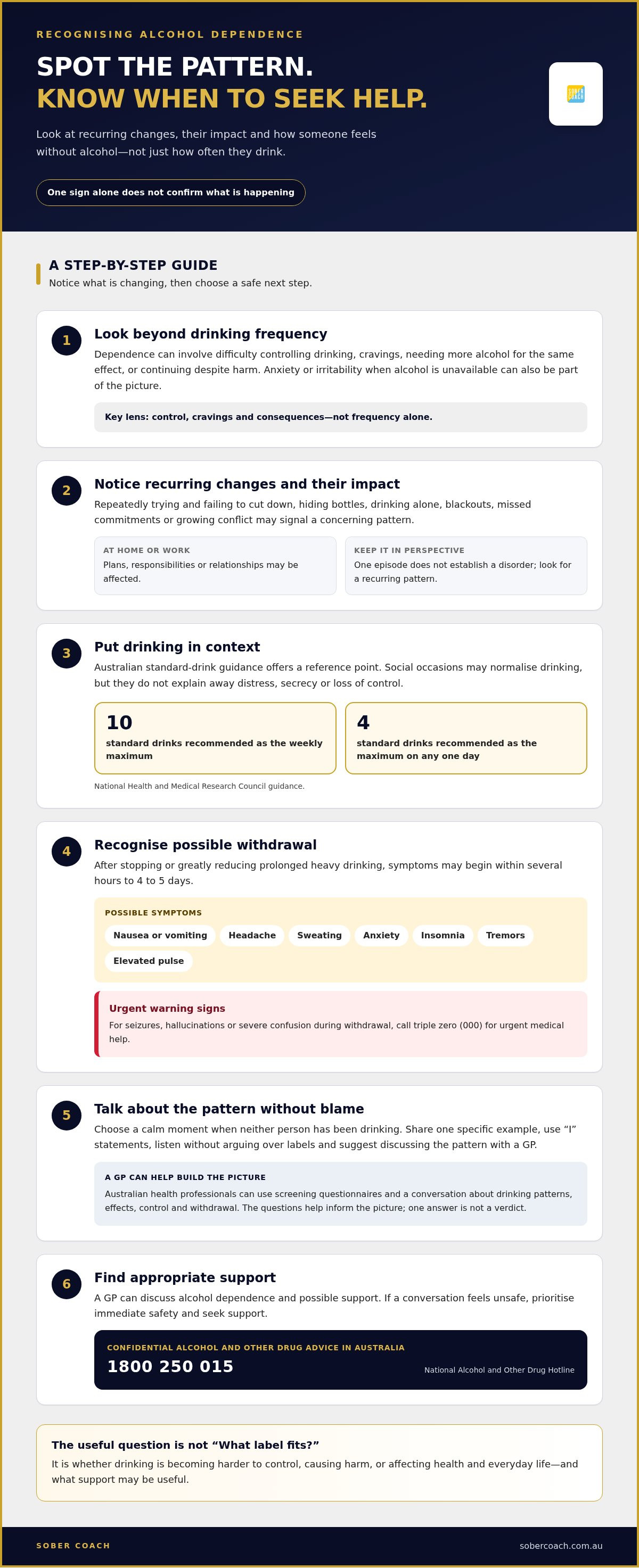
The signs of alcoholism can include emotional and behavioural changes, not just visible physical effects. Someone might become anxious or irritable when alcohol isn’t available, plan their day around drinking or continue despite problems at home or work. One episode doesn’t establish a disorder; look for a recurring pattern and its impact.
Notice what changes around drinking. Repeatedly trying and failing to stop, hiding bottles, drinking alone, blackouts or needing more alcohol for the same effect can signal harmful use. For example, a partner who regularly misses commitments after drinking may be facing consequences worth discussing honestly, without blame.
Australian social occasions can make it harder to notice a shift. A barbecue, pub catch-up or celebration may normalise drinking, but social pressure doesn’t explain away distress, secrecy or loss of control. The National Health and Medical Research Council recommends no more than 10 standard drinks and no more than 4 standard drinks on any one day.
Physical dependence may show up as cravings or feeling unwell without alcohol. Withdrawal can include nausea, vomiting, headache, sweating, anxiety, insomnia, tremors or an elevated pulse. Symptoms can begin within several hours to 4 to 5 days after stopping or greatly reducing prolonged heavy drinking.
Australian health professionals can assess alcohol concerns with screening questionnaires and a conversation about drinking patterns, effects, control and withdrawal. The questions help build a picture; one answer isn’t a verdict. A GP can discuss your experience and advise on next steps.
If you speak with a partner, choose a calm moment when neither of you has been drinking. Describe one specific example, such as missed work after drinking. Use “I” statements, listen without arguing over labels and suggest discussing the pattern with a GP. If the conversation feels unsafe, prioritise your immediate safety and seek support.
For confidential alcohol and other drug advice in Australia, call the National Alcohol and Other Drug Hotline on 1800 250 015. A GP can also discuss alcohol dependence and possible support. If someone has seizures, hallucinations or severe confusion during withdrawal, call triple zero (000) for urgent medical help, according to the Australian Communications and Media Authority.
What is alcohol dependence?
Alcohol dependence involves difficulty controlling drinking, craving alcohol or continuing despite harm. Its effects can extend beyond drinking, affecting mental and physical wellbeing, relationships and everyday responsibilities.
Chronic Health and Social Effects
Chronic alcohol use means drinking continues over time despite harmful effects on health or daily life. It can contribute to alcohol-related health conditions, while the strain may show up at home, work or among friends. One person might miss commitments; another might continue despite repeated conflict with a partner. These patterns matter because their effects can accumulate across several areas of life.
Dependence isn’t defined only by how much someone drinks. Some people drink daily, while others go weeks or months without alcohol and then lose control when they drink again. The pattern, difficulty stopping and consequences all help explain what’s happening. How well someone functions without alcohol is another important part of the picture.
Anxiety and Depression
Alcohol may become a way to cope with difficult emotions, including anxiety or low mood, but the relief is temporary. Someone might reach for a drink after a tense day, only to find the underlying stress remains when its effects wear off. Over time, relying on alcohol in social situations or under emotional pressure can make it harder to practise other coping strategies.
Emotional symptoms deserve attention alongside drinking habits. Feeling tense or unhappy without alcohol, or becoming anxious and irritable when unable to drink, may be part of dependence. These experiences don’t make someone weak or beyond help. They may show that drinking has become tied to emotional wellbeing, which is relevant when considering support.
Brain and Sleep Effects
Alcohol acts on the brain and can affect feelings and behaviour, depending on how much someone drinks. A person may feel more relaxed at first, then become less steady in their decisions or reactions. When alcohol becomes a regular way to switch off, routines can form around drinking, and evenings without it may feel harder to manage.
Sleep can be affected too. Difficulty sleeping is a possible withdrawal symptom when someone with alcohol dependence cannot get a drink. This can create a difficult cycle: drinking becomes linked with winding down, while time without alcohol brings restlessness or poor sleep. Noticing the connection can help someone describe their experience clearly in a health conversation.
Effects on Daily Life
Dependence can take time and attention away from everyday responsibilities. Someone may plan the day around when and what to drink, prioritise alcohol over activities or continue despite problems at work or in relationships. A partner might notice cancelled plans, growing secrecy or repeated arguments. These examples help describe the impact without reducing a person to a label.
Social life may narrow as drinking takes priority, or relationships may become tense when others raise concerns. If alcohol is affecting your mood, sleep or ability to meet commitments, recovery support for alcohol use can offer a place to explore what you want to change. Recognising the pattern is a practical first step, not a judgement.
Physical changes associated with alcohol use
Alcohol can affect appearance, appetite and skin, but no single change proves someone has an alcohol problem. Look for physical changes alongside shifts in daily routines, health and mental wellbeing.
Grooming and Appearance Changes
Changes in grooming mean a person’s usual self-care starts to slip, such as wearing the same clothes repeatedly or neglecting personal hygiene. A messy appearance alone doesn’t identify the cause, but a clear change from someone’s usual habits may alert loved ones that something is different.
For example, someone who once kept regular appointments might begin cancelling haircuts or arrive at work looking unwashed. Consider this alongside their drinking and other effects, rather than treating appearance as proof of a disorder. A compassionate conversation can focus on the specific change you’ve noticed.
Weight and Appetite Changes
Alcohol can affect appetite and energy intake, so drinking may coincide with changes in weight or eating habits. It can increase the hunger-related hormone ghrelin, while beer and wine also contribute calories. Someone might snack more after drinking or skip a meal to drink instead.
Weight change has many possible causes, so it’s more useful to notice the broader pattern. For instance, someone might regularly replace dinner with alcohol or feel hungrier after drinking. Tracking eating routines alongside alcohol use can provide a clearer picture to discuss with a health professional.
Jaundice and Skin Changes
Jaundice causes yellowish-brown skin when bilirubin levels are high and can indicate liver problems. Alcohol can also contribute to facial redness, spider veins and dehydrated-looking skin. These changes have different causes and don’t, by themselves, establish alcohol-related disease.
Notice changes from the person’s usual appearance, such as persistent facial redness or yellowing skin. Heavy alcohol use can impair the immune system, increasing the risk of skin infections and sores. New or concerning symptoms need medical attention, especially alongside other health changes.
Physical changes can shift during recovery as drinking habits and daily routines change. For example, replacing an evening drinking ritual with a meal, walk or regular bedtime creates a different structure for that part of the day. Recovery isn’t measured by appearance alone; changes in skin, weight or grooming don’t reveal how someone feels mentally.
When alcohol has become part of someone’s daily routine, recovery can also involve rebuilding self-care. A person might plan meals, keep appointments or reconnect with activities they stopped attending. These examples can make progress visible without turning weight or appearance into a measure of worth.
If you notice jaundice, skin sores or persistent physical changes, describe what you’ve observed and when it began in a health conversation. Connecting those details with alcohol use and changes in mental health can help a professional understand the bigger picture. The aim is clarity and support, not shame.
Alcohol use, misuse and abuse
Alcohol use becomes concerning when drinking causes harm or feels difficult to control. “Alcohol abuse” is often used informally for harmful patterns, while alcohol use disorder describes a condition involving continued drinking despite problems. The amount consumed matters, but so do cravings, dependence, effects on daily life and attempts to cut down.
Australia’s guidance offers a benchmark, not a diagnosis. The National Health and Medical Research Council recommends no more than 10 standard drinks each week. The National Health and Medical Research Council also recommends no more than 4 standard drinks on any one day. In Australia, the Australian Government Department of Health, Disability and Ageing recommends that people have no more than 10 standard drinks each week.
A standard drink measures pure alcohol, not simply one glass or container. A large pour or strong beer may contain more than one standard drink. Checking the label and noting how much is poured can help estimate consumption more accurately. Even within the guideline, drinking that causes harm or feels uncontrollable deserves attention.
Alcohol use disorder is assessed through patterns, not a single evening or one answer. The DSM-5 criteria include difficulty controlling drinking, cravings, tolerance, withdrawal and continuing despite harm. Meeting 2-3 criteria within a 12-month period indicates mild disorder; 4-5 indicates moderate disorder; 6 or more indicates severe disorder. These thresholds describe severity, not a person’s worth or potential.
Misuse can include binge drinking, even without dependence. Someone may drink heavily at a celebration, regret their actions or take risks, then not drink for weeks. That pattern can still cause harm. Conversely, daily drinking alone doesn’t establish alcohol use disorder; its effects, control and consequences provide important context.
Dependence may be physical, psychological or both. A person might feel anxious, sweaty, nauseated or shaky when alcohol is unavailable, then drink to ease those symptoms. Withdrawal can include seizures or hallucinations in severe cases. It can begin within several hours to 4 to 5 days after stopping or greatly reducing heavy, prolonged alcohol use.
Because withdrawal can cause serious complications, someone with physical dependence shouldn’t stop suddenly without medical advice. A healthcare professional can assess the drinking pattern and whether medical support is needed. This matters even when someone is determined to change; motivation doesn’t prevent the body’s response to withdrawal.
Try a practical check: record drinks, situations and consequences, then notice whether drinking is increasing, hard to control or affecting health and relationships. If someone wants to stop but experiences withdrawal symptoms, they should speak with a healthcare professional before changing their intake. This helps distinguish risky use from dependence and makes safety part of the plan.
Alcohol-related consequences and risky decisions
Alcohol can affect judgement and behaviour, increasing the chance of choices someone later regrets. A person might become aggressive during an argument, take risks they’d usually avoid or drive after drinking. These consequences can occur without dependence. The pattern still matters: repeated harm at home, work or socially can signal that drinking needs attention.
Excessive alcohol use can affect coordination and balance because it can impair the cerebellum. This may increase the risk of falls and accidents, including when someone is sober. For example, ongoing balance problems can make stairs, cycling or household tasks more hazardous. A fall or accident is worth discussing with a health professional, especially if drinking has been part of the pattern.
Alcohol can also affect the body in ways that aren’t immediately visible. Reduced platelet counts and other clotting factors can make bruising more likely and increase stroke risk. Erosive gastritis can wear away the stomach lining, which may bleed or develop ulcers. These complications show why alcohol addiction can affect more than behaviour or relationships.
Over time, alcohol can damage peripheral nerves, causing tingling in the hands and feet. This condition is known as alcoholic neuropathy. Someone might notice persistent pins and needles while walking or handling objects. These symptoms can have different causes, but alongside heavy drinking they deserve medical attention, rather than being dismissed as ordinary ageing or tiredness.
Risk can build through repeated situations. Someone may miss work after drinking, spend money set aside for bills or break promises to a partner. These examples don’t diagnose dependence, but they show how drinking can create practical consequences. Tracking what happened before and after drinking can make the pattern clearer in a health conversation.
Withdrawal symptoms add another safety concern. Someone who has developed physical dependence may feel unwell when alcohol isn’t available, then drink to ease those symptoms. Stopping suddenly after prolonged, consistent drinking can cause withdrawal, which may become serious. Seizures or delirium tremens require urgent medical attention. Don’t treat an attempt to stop as a test of willpower; safety matters.
If alcohol is contributing to risky decisions, injuries or repeated conflict, talking through the pattern can help identify what needs to change. Note the situations, effects and consequences, then discuss them with a health professional. For support focused on changing drinking patterns, explore recovery coaching as a next step.
Sober Coach: One-on-One Recovery Coaching
Sober Coach offers one-on-one coaching with Angie Dowling for people ready to explore changes to their drinking and build recovery goals around everyday life. You don’t need to wait until every consequence feels severe before seeking support. Coaching can help you reflect on patterns, clarify what you want to change and stay focused as you work towards those goals.
Intensive Recovery Workshops and In-Home Recovery Support offer other ways to engage, while online group coaching via Zoom can provide a shared space for support. If you experience withdrawal symptoms or may be physically dependent on alcohol, seek medical advice before stopping; coaching does not replace medical care.
If you’re ready to explore your next step, contact Sober Coach.
Choose a next step that feels possible
Recognising the signs of alcoholism can be a turning point, but you don’t need to settle on a label before seeking support. Start with what you want to change: more choice around drinking, steadier routines or a way to reconnect with the life you want. One honest conversation can help clarify that intention.
Sober Coach offers One-on-One Recovery Coaching, Intensive Recovery Workshops and In-Home Recovery Support. These options create different ways to work on personal recovery goals, whether you want individual guidance, an intensive setting or support at home. The right next step is the one that helps you begin with honesty and purpose.
If you’re ready to explore support, contact Sober Coach. You can move forward at your own pace, with a focus on what matters to you now. A new direction can begin with one small, deliberate choice.
Frequently Asked Questions
What are the symptoms of harmful alcohol use?
Harmful alcohol use can show up when drinking leads to noticeable problems or repeatedly overrides someone’s intentions. For example, someone may drink before a workday despite past mistakes, spend money needed for bills or avoid social plans that don’t involve alcohol. Note the situation, what happened and how it affected daily life. These details can help explain concerns to a GP.
What is Alcohol Use Disorder (AUD)?
Alcohol Use Disorder (AUD) is a health condition involving difficulty controlling alcohol use despite negative effects. It isn’t simply a measure of how much someone drinks or a judgement about character. A health professional considers symptoms, their impact and the pattern over time. For instance, repeated attempts to cut down that don’t last may be relevant in an assessment.
What is AUD?
AUD stands for Alcohol Use Disorder, a term for a problematic pattern of alcohol use. It can help people describe their concerns without relying on labels such as “alcoholic,” which may feel shaming or inaccurate. If you’re preparing to talk with a GP, write down what you’ve noticed, what you’ve tried changing and how drinking affects responsibilities or wellbeing.
What is classified as alcoholism?
“Alcoholism” is a commonly used, non-clinical term; healthcare professionals may assess the pattern as alcohol use disorder. They consider symptoms such as impaired control, cravings and continued drinking despite harm, rather than deciding from appearance or one drinking episode. Under DSM-5 criteria, severity is based on the number of symptoms within a 12-month period. A qualified assessment can put those experiences in context.
What are the common signs and symptoms of alcohol use disorder?
Common signs include alcohol taking priority over responsibilities, repeated difficulty limiting intake and continued use despite consequences. For example, someone might arrange childcare, transport or social plans around drinking, then miss commitments because of it. Symptoms vary, so consider how alcohol affects the person’s choices and routines. A GP can assess concerns without requiring someone to adopt a particular label.
What are the early warning signs of problem drinking?
Early warning signs can include drinking more often than intended, thinking frequently about the next occasion or using alcohol as the main way to unwind. Notice small changes: an evening drink becoming a daily routine, or repeatedly making rules about drinking and then breaking them. Keep a private record of occasions and effects. This can make gradual changes easier to recognise and discuss.
How can alcohol dependence affect physical health, mood and behaviour?
Dependence can affect the body, emotional wellbeing and how someone responds to others. A person may feel tense without alcohol, become unusually reactive during disagreements or find everyday responsibilities harder to manage. Ongoing use can also contribute to health problems, including nerve damage that causes tingling in the hands or feet. Describe specific changes and when they occur rather than trying to diagnose the cause yourself.
How can you distinguish alcohol dependence from binge drinking or heavy drinking?
Binge or heavy drinking describes a pattern or amount of alcohol use; dependence involves difficulty functioning or controlling use without alcohol. Someone may binge at occasional events without being dependent, but the pattern can still cause harm. Dependence is more strongly suggested when cravings, withdrawal or repeated unsuccessful efforts to cut down shape everyday choices. A GP can help assess both risk and dependence.
Comments